
Stairs: what to know before you hire
A staircase is a structural, code-heavy build — and the type you want isn't just a look, it decides who you hire. A traditional staircase and a floating one are built by different trades with different skills, tools, and engineering, and one rarely does the other well. This guide helps you pick the type, the details, and the right builder.
What stair work looks like
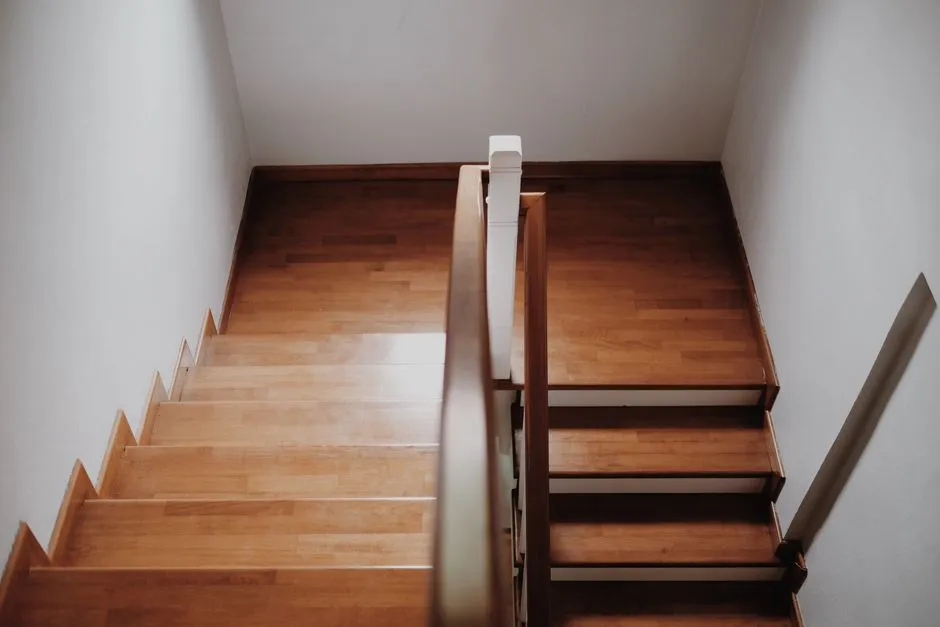
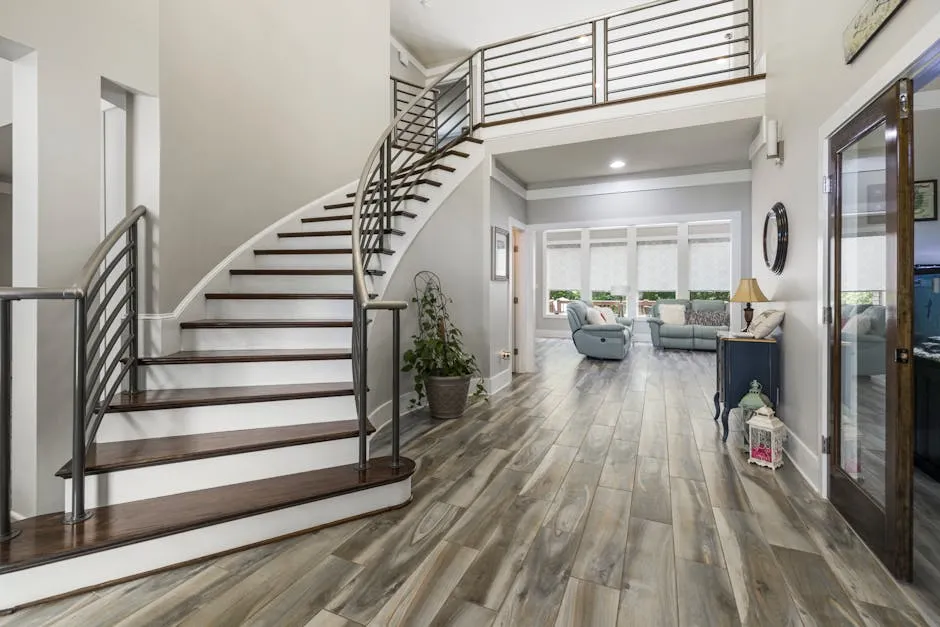
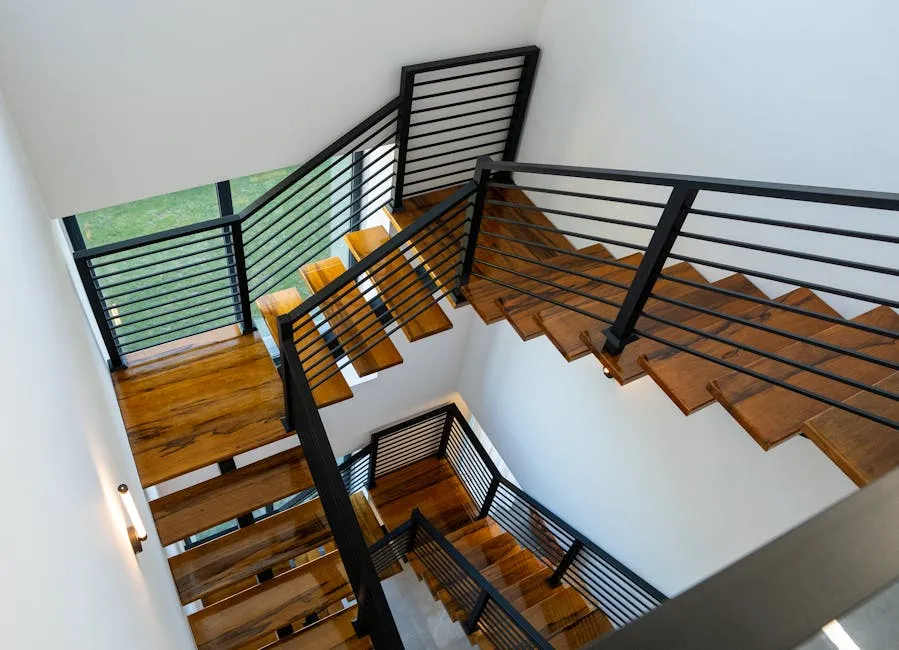
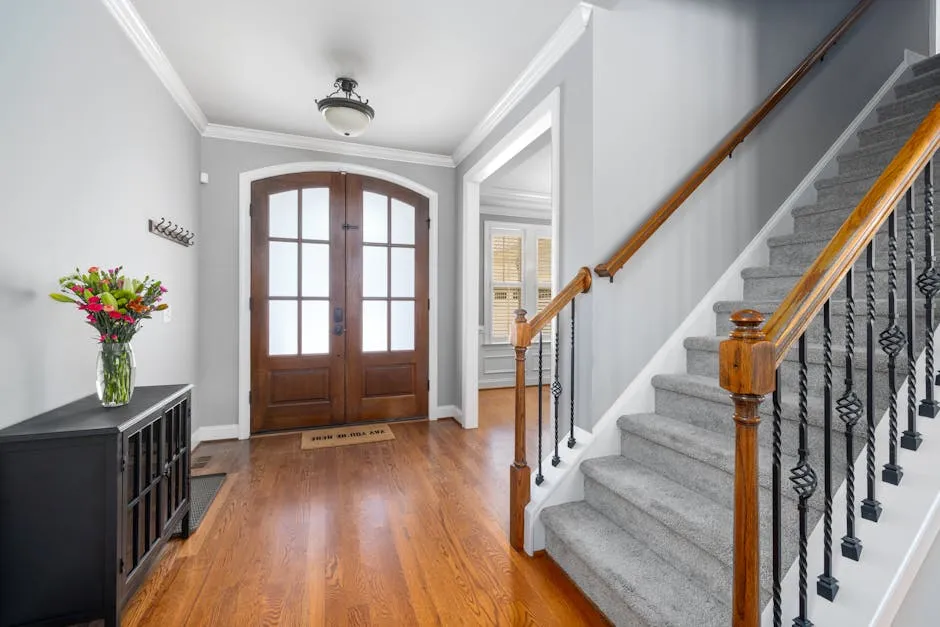
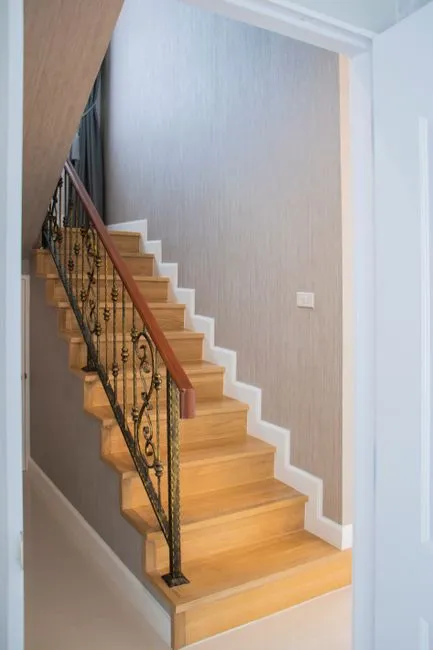
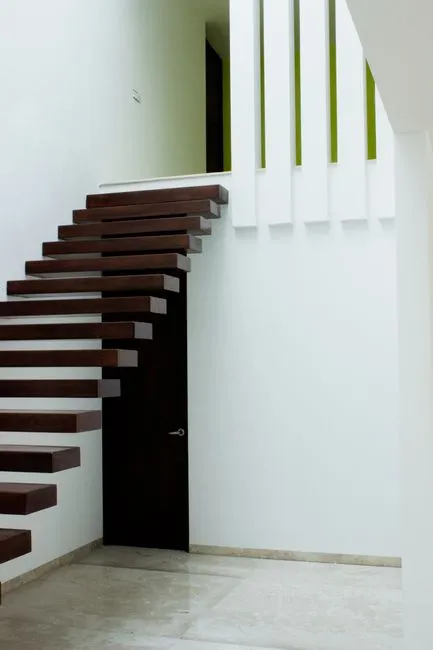
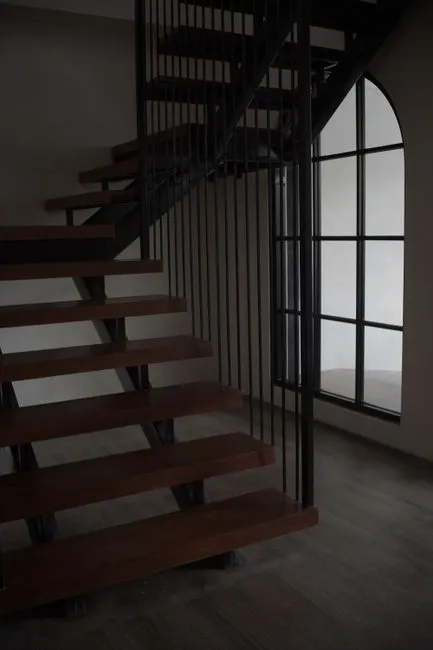
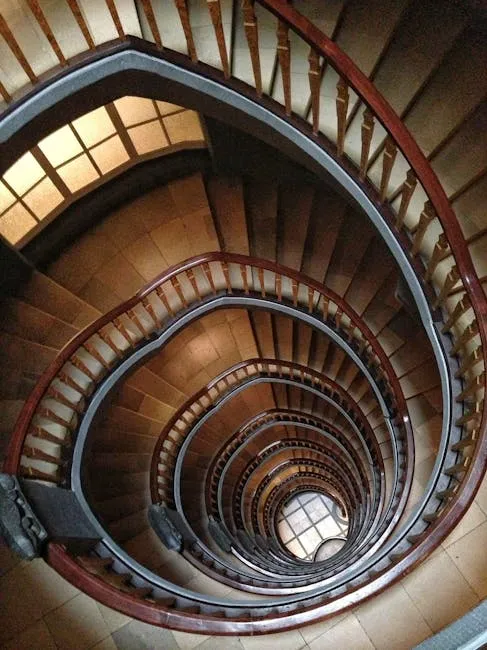
A look at the kind of work and finishes involved — licensed reference photos.
How the work actually works
Choosing a staircase is really choosing a building method — and a builder. Here are the main types, the details that define them, and why the trade that builds one type usually can't build the other.
- 1
Confirm the rise, run, and headroom
Code requires every step to be uniform within a tight tolerance, with a comfortable rise and run (commonly ~7" rise / 11" run) and headroom around 6'8". Your floor-to-floor height and the available run set what's physically possible before any style choice.
- 2
Choose the stair type — and the right builder
Traditional, floating/cantilever, mono-stringer, or spiral/curved. This is the decision that picks your contractor: a floating-stair specialist and a traditional stair carpenter are different trades.
- 3
Engineer the structure
Traditional stringers carry the load themselves. Floating stairs don't — a cantilever needs a specially reinforced, engineered wall, and a mono-stringer needs a fabricated steel beam. Both usually involve a structural engineer.
- 4
Build treads, risers, and nosing
Material and nosing profile are chosen here. Treads must be level and identical step to step; the nosing (front edge) affects look, footing, and code.
- 5
Install the railing to code
Handrail at a code height (~34–38"), continuously graspable, with balusters or panels spaced so a 4" sphere can't pass. Glass and cable systems have their own rules and specialist installers.
Stair types — and who builds them
These aren't just styles; they're different structural systems built by different trades. Matching the builder to the type is the whole game.
- Traditional (stringer) stairs
- Treads and risers carried on saw-tooth stringers — the standard, most economical build, done by finish carpenters and stair shops. 'Closed' (with risers) or open-riser for a lighter look.
- Floating / cantilever stairs
- Treads appear to float from a wall with no visible support — anchored into a specially engineered, reinforced wall (or a hidden steel frame inside it). Demanding, expensive, and fully structural. Built by specialists, not general carpenters.
- Mono-stringer (monorail)
- A single central steel beam carries the treads — the floating look without a structural wall. Steel fabrication and engineering: a different trade again from wood-stringer carpentry.
- Spiral & curved (helical)
- A tight spiral around a center pole (space-saving, but awkward to move furniture on) or a sweeping curved stair (a high-skill custom build). Both are specialty work, not everyday carpentry.
Nosing — the front edge of each step
The nosing is the lip at the front of each tread. Its profile changes the look, the feel underfoot, and what code allows.
- Projecting (standard) nosing
- The tread overhangs the riser by ~3/4–1-1/4" with a rounded or square lip. Code generally wants a nosing on stairs that have risers — it gives your foot more landing room.
- Square (90°) nosing
- A crisp right-angle edge for a clean, modern look. Slightly less forgiving underfoot, and usually still overhangs the riser.
- Noseless / flush
- No overhang — the tread front is flush with the riser. The minimalist look, common on open-riser and floating stairs (which are often exempt from the nosing rule). Confirm it meets your local code.
Treads, stringers & railings
The visible materials and the railing are a big share of the look and the budget — and the railing is heavily code-driven.
- Treads
- Solid hardwood and stone read premium; engineered or paint-grade cost less. Whatever the material, treads must be consistent and dead level step to step.
- Stringers
- Wood (carpentry) or steel (fabrication). Steel enables open and floating looks but is a different trade — confirm your builder actually works in it.
- Railing / balustrade
- Wood, metal pickets, tensioned cable, or glass panels. Code controls handrail height, graspability, and baluster spacing (no 4" gap). Cable and glass are specialist installs and the priciest.
Red flags of a corner-cut job
- Hiring a traditional stair carpenter for a floating/cantilever stair, or vice versa — they're different trades and it shows.
- A floating or cantilever stair with no structural engineering, reinforced wall, or steel detailed.
- Inconsistent rise or run between steps — a trip hazard and a code failure.
- Baluster gaps wider than 4", or a handrail that isn't continuously graspable.
- No permit on a new or relocated staircase.
Put it in writing
- A builder who specializes in your stair type — ask to see floating/cantilever (or curved) work specifically, not just 'stairs.'
- Structural engineering for any floating, cantilever, or mono-stringer stair.
- Uniform rise and run, code headroom, and the nosing profile named in writing.
- A code-compliant railing — handrail height and graspability, balusters under 4" spacing.
- Permit and inspection for a new or moved staircase.
Talk like a pro
The terms a contractor uses — so you can follow the conversation and ask the right questions.
- Stringer
- The angled board (or steel beam) that carries the treads up the slope.
- Tread / riser
- The part you step on / the vertical face between treads. Open-riser stairs leave the riser out.
- Nosing
- The front lip of a tread; its profile affects look, footing, and code compliance.
- Rise / run
- The height of each step and its depth — code requires them uniform within a small tolerance across the whole flight.
- Cantilever vs. mono-stringer
- Two ways to 'float' a stair: treads anchored into an engineered wall, vs. carried on a single central steel beam.
- Baluster / balustrade
- The vertical infill (and the whole railing assembly) that prevents falls; spacing is code-limited to under 4".
What drives the cost
- Stair type — a traditional staircase, a cantilever (floating) stair, and a steel mono-stringer are entirely different builds and budgets
- Structural work — floating stairs need an engineered wall or a steel frame, often a structural engineer and a fabricator
- Materials — paint-grade vs. hardwood or stone treads, wood vs. steel stringers
- Railing/balustrade — code-required and often a big share of the price (glass and cable cost the most)
What it costs to hire
Typical per-unit ranges for stairs services (estimates until local pros publish their rates):
Railing install (handrail + balusters) | $16–$16 per linear ft |
Railing — cable rail | $22–$22 per linear ft |
Railing — glass panel | $25–$25 per linear ft |
Outdoor stairs — wood / composite | $38–$38 per stair |
Newel post install | $126–$126 per post |
See full prices and pros in Palmdale, Los Angeles.
Permits & safety
This is safety- and code-sensitive work that often requires a licensed professional and a permit. Rules vary by city and county, so confirm with your local building department before any work begins.
Stairs FAQ
What should a stairs quote actually include?
A good quote names the materials, the spec or grade, and the scope of work — not just one lump-sum number. The more a bid leaves vague, the more room there is for surprise costs and cut corners. The checklist above lists exactly what to put in writing for this kind of work.
How much does Stairs work cost?
On FinerNest, Stairs work is priced by the unit rather than as a single bid, so you see the rate up front. The rates above reflect what pros publish; open the city links to see full prices and available pros near you.
How do I find a trustworthy stairs pro?
Look for published rates, reviewable past work, and verified licensing where it applies. FinerNest lists local pros with all three so you can compare on work and price rather than chasing quotes.
Decided to hire it out?
Compare stairs pros with real rates and reviewable work.