
Closets: what to know before you hire
Closet systems run from $100 wire shelving to custom built-ins that cost as much as a small kitchen. The four tiers aren't just price points — they're different products with different lifespans and resale impact. Here's what you actually get at each level.
What closet work looks like
A look at the kind of work and finishes involved — licensed reference photos.
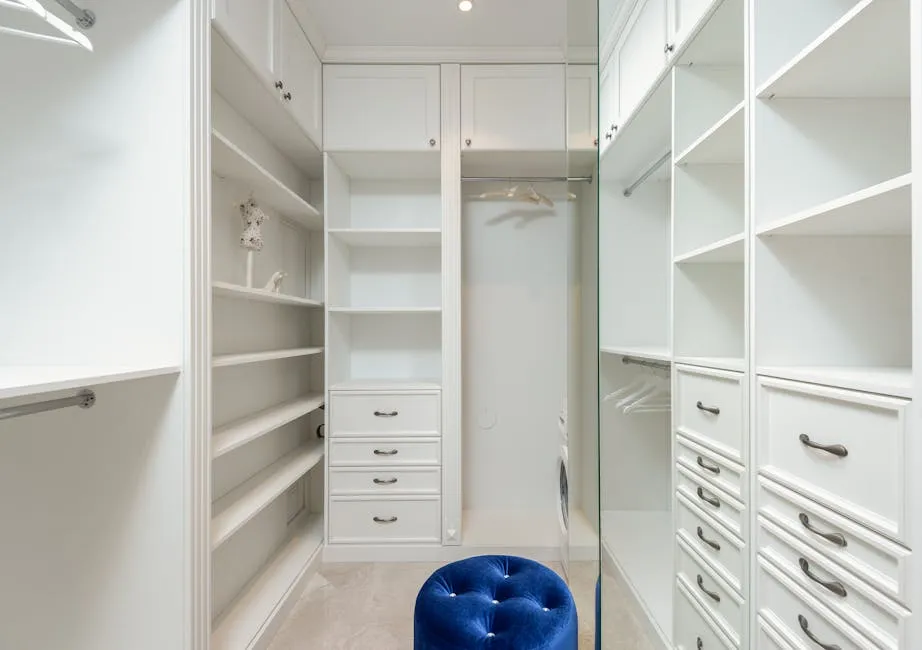
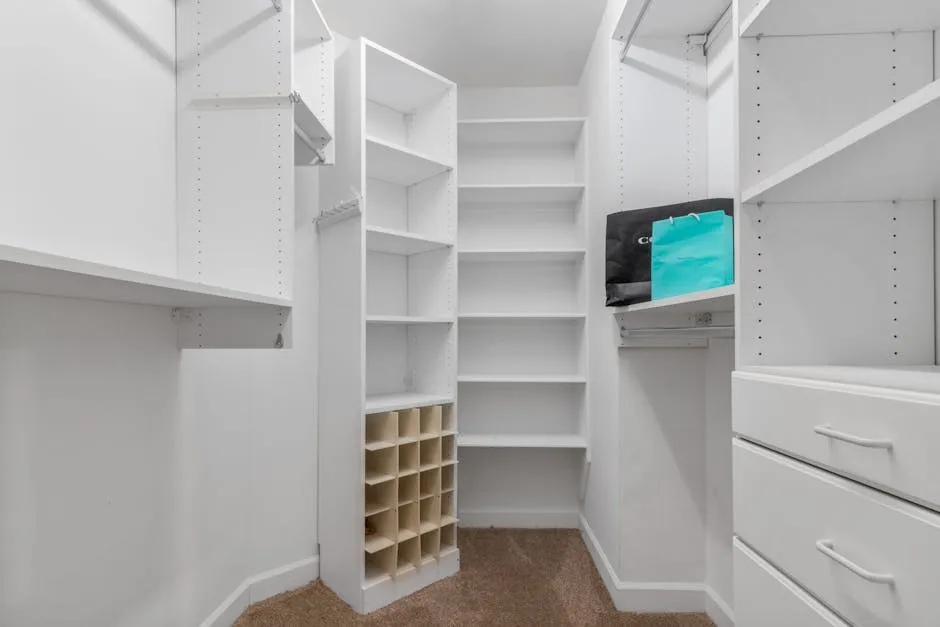
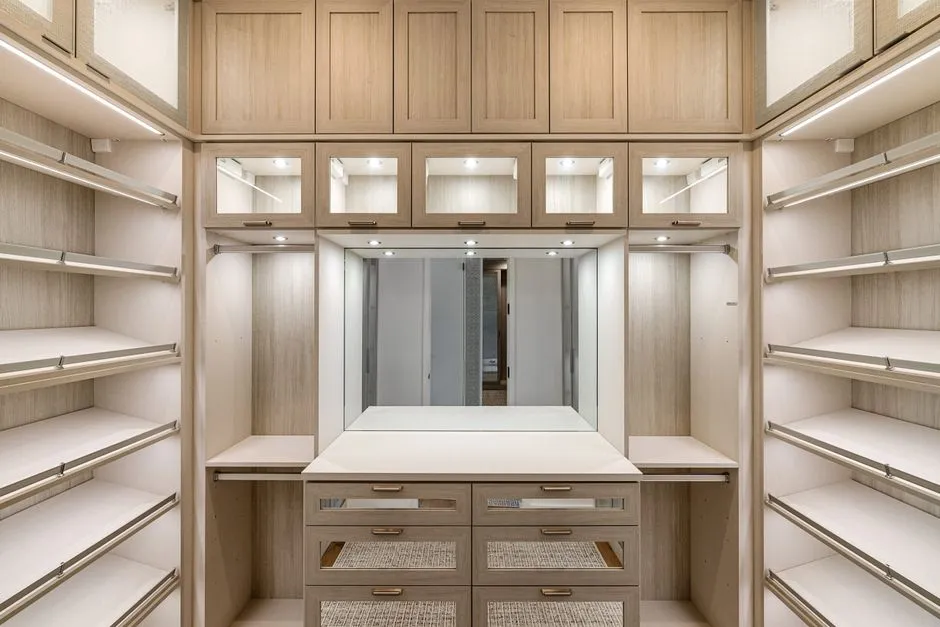
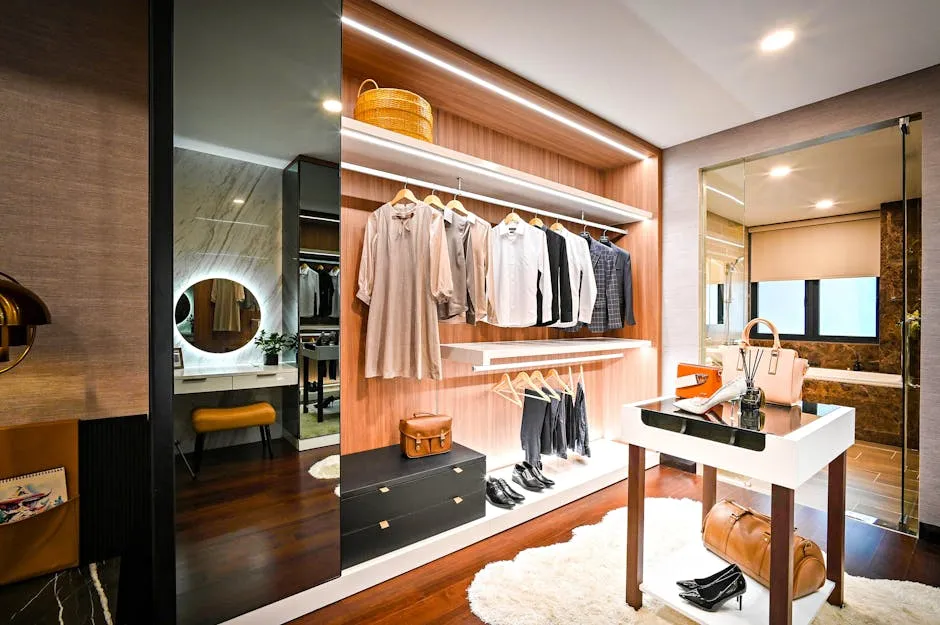
How the work actually works
The layout matters more than the material — a cheap system planned well beats an expensive one that wastes space. Here's how a closet goes in, and the honest difference between the four tiers.
- 1
Measure and design the layout
Good closet design starts with what you're storing — long-hang vs. double-hang, drawers, shoes. Hang heights and shelf spacing drive how much actually fits; a well-planned wire system can out-store a pricey one laid out poorly.
- 2
Mount to the structure
Wall-hung systems hang off a rail anchored into studs; floor-based systems stand on the floor and scribe to the wall. Either way it has to hit framing — shelving anchored only to drywall will pull out under load.
- 3
Level and assemble
Uprights set plumb, shelves level, drawers and accessories added. An out-of-level run shows immediately when drawers and doors don't sit right.
- 4
Anchor and finish
Final anchoring, edge-banding on any cut shelves, and filler panels scribed to the walls for a built-in look rather than a kit bolted to the wall.
The four closet tiers
The same closet can cost $150 or $6,000 depending on the tier. Knowing which you're buying is how you make sure the price matches the product.
- Basic wire
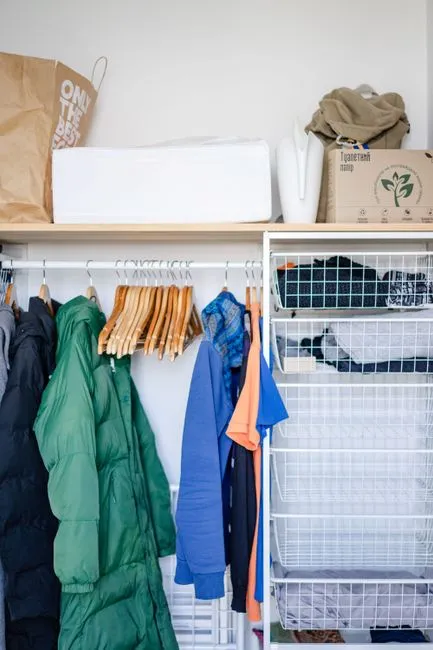
- Coated-wire shelving (ClosetMaid / Rubbermaid), often DIY. Cheap and functional, but sags under heavy loads and looks utilitarian. Fine for a garage or kid's closet.
- Stock wood / melamine
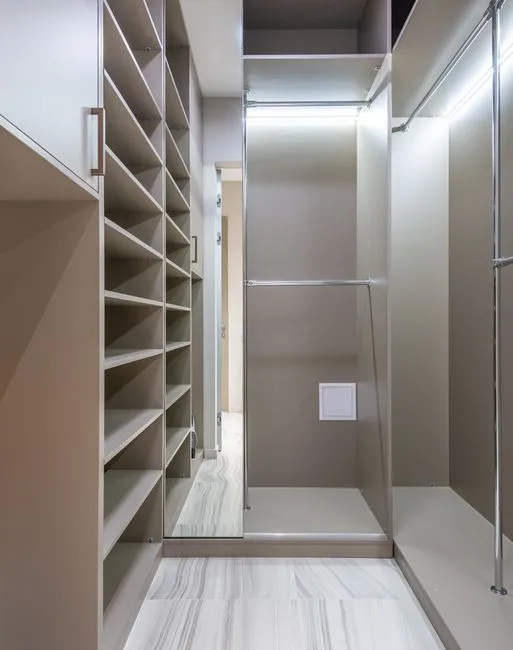
- Pre-sized melamine panels and shelves (IKEA PAX, Easy Closets). A big step up in looks and load, modular but limited to stock sizes — gaps get bridged with filler panels.
- Semi-custom
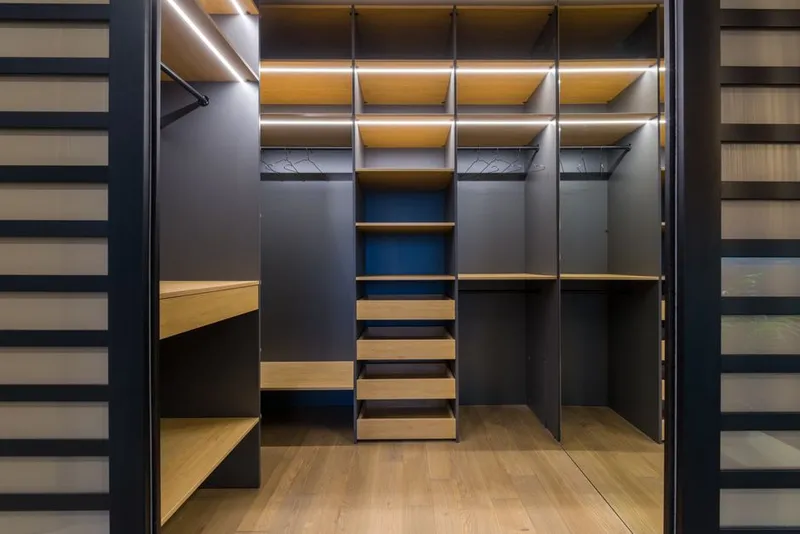
- Built to your dimensions from a catalog of finishes and accessories, professionally installed and scribed to the walls (California Closets-style). The sweet spot for a primary closet.
- Custom built-in
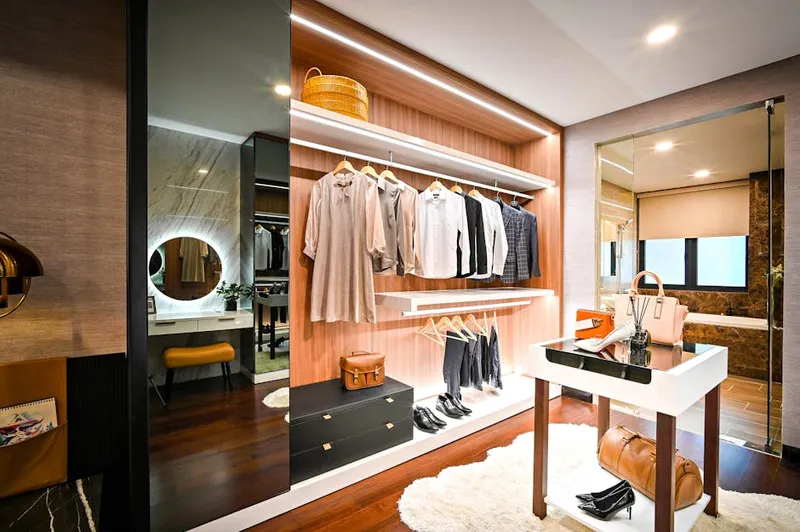
- Site-built carpentry in any configuration, finished like cabinetry. The most expensive — and the only tier that reads as a true built-in and adds resale value.
Red flags of a corner-cut job
- Shelving anchored to drywall only, not studs — it will sag or pull out.
- An out-of-level run, so drawers and doors won't sit right.
- Cut shelf edges left raw (no edge-banding) on wood or melamine systems.
- A high-end price for what is really a stock kit.
- No layout discussion — just 'we'll put some shelves in.'
Put it in writing
- A layout designed around what you're storing, not generic shelving.
- Anchoring into studs, and a level install.
- The tier named in writing (wire / stock / semi-custom / custom) so the price matches the product.
- Edge-banding and scribed filler panels for a finished look on wood systems.
- Demo of the old shelving and any wall patching included.
Talk like a pro
The terms a contractor uses — so you can follow the conversation and ask the right questions.
- Long-hang / double-hang
- Tall hanging for dresses and coats vs. two stacked rods for shirts and pants — the layout choice that sets your capacity.
- Wall-hung vs. floor-based
- Systems that hang off a wall rail (easier to clean under) vs. ones that stand on the floor (more weight capacity).
- Melamine
- A durable coated particleboard used in stock and semi-custom systems.
- Scribe / filler
- Trimming panels to follow a crooked wall, or filling the gap, so the system looks built-in.
- Edge-banding
- The finished strip on a cut shelf edge; missing banding is a sign of a rushed job.
What drives the cost
- System tier — basic wire, stock wood/melamine, semi-custom, or fully custom built-in (an order-of-magnitude spread)
- Linear footage, height, and accessories (drawers, shoe racks, hampers, lighting)
- Whether it's anchored into studs and how level the install is
- Demo of old shelving and any drywall patching after
What it costs to hire
Typical per-unit ranges for closets services (estimates until local pros publish their rates):
Closet system — basic wire (ClosetMaid / Rubbermaid) | $13–$13 per linear ft |
Closet system — stock wood (Easy Closets / IKEA PAX / Selectives) | $19–$19 per linear ft |
Closet system — semi-custom (California Closets-style) | $25–$25 per linear ft |
See full prices and pros in Palmdale, Los Angeles.
Permits & safety
Permit and licensing rules vary by city and county. Before you start, check your local building department — and when in doubt, a licensed pro will know what your jurisdiction requires.
Closets FAQ
What should a closets quote actually include?
A good quote names the materials, the spec or grade, and the scope of work — not just one lump-sum number. The more a bid leaves vague, the more room there is for surprise costs and cut corners. The checklist above lists exactly what to put in writing for this kind of work.
How much does Closets work cost?
On FinerNest, Closets work is priced by the unit rather than as a single bid, so you see the rate up front. The rates above reflect what pros publish; open the city links to see full prices and available pros near you.
How do I find a trustworthy closets pro?
Look for published rates, reviewable past work, and verified licensing where it applies. FinerNest lists local pros with all three so you can compare on work and price rather than chasing quotes.
Decided to hire it out?
Compare closets pros with real rates and reviewable work.