
Kitchen: what to know before you hire
A kitchen ranges from a single faucet swap to a full gut — and a full remodel is really a coordination project: cabinets, counters, plumbing, and electrical installed in a strict order. The budget is set by the cabinets and by whether you move plumbing or walls.
What kitchen work looks like
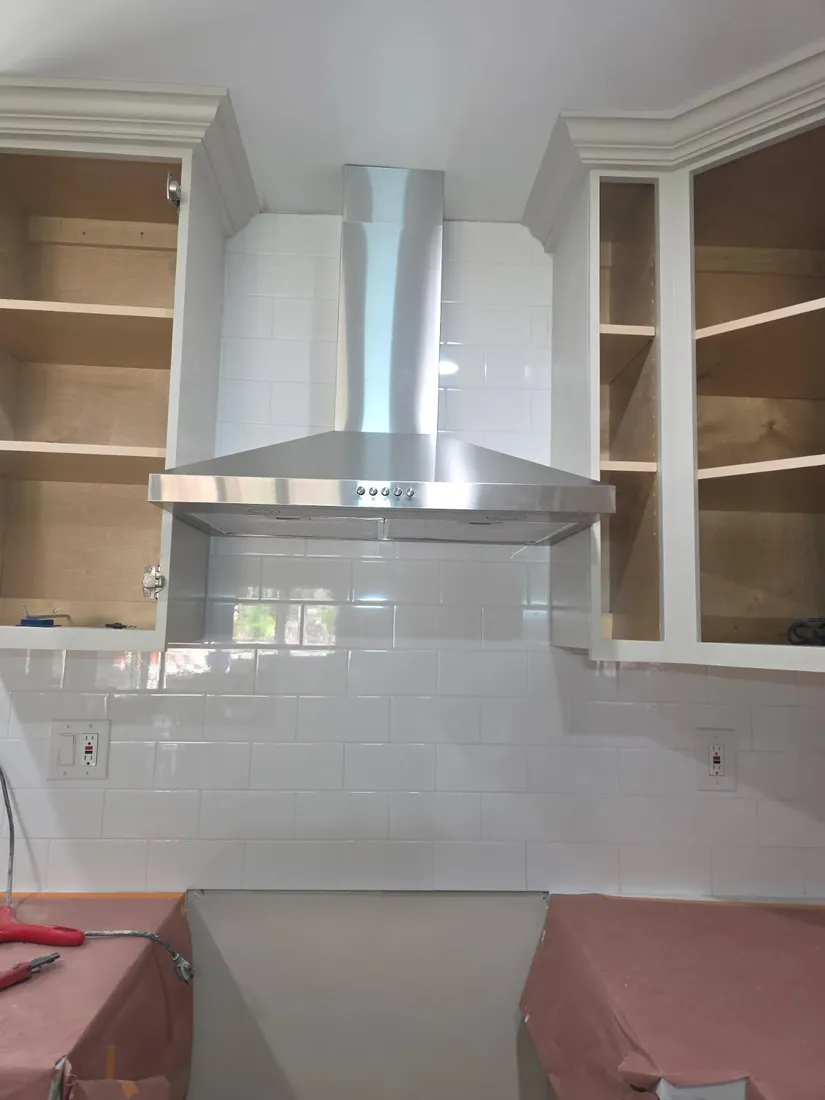
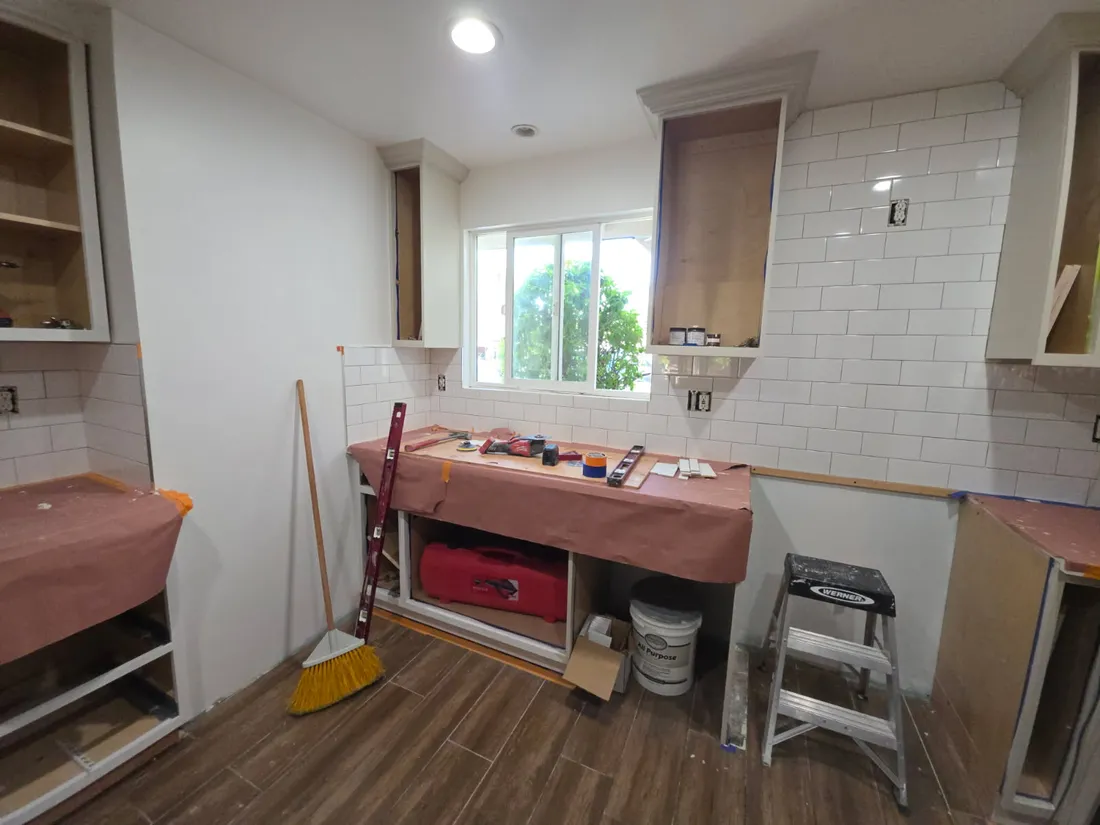
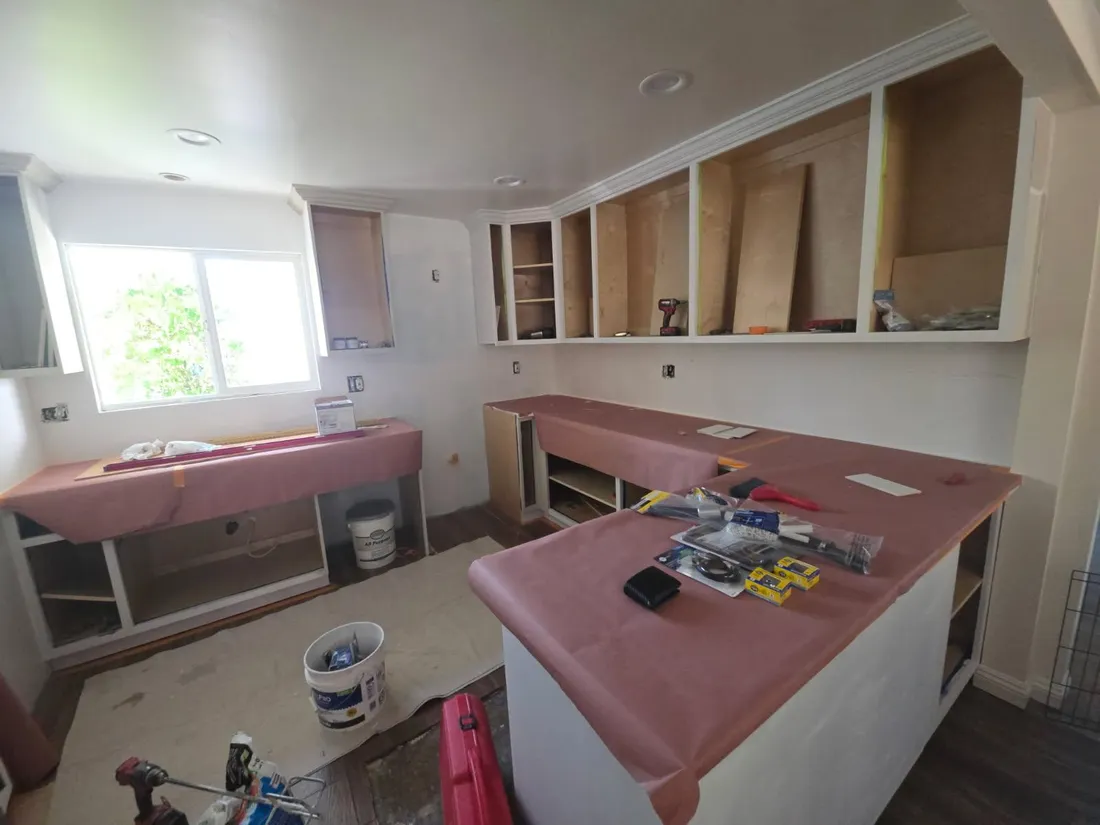
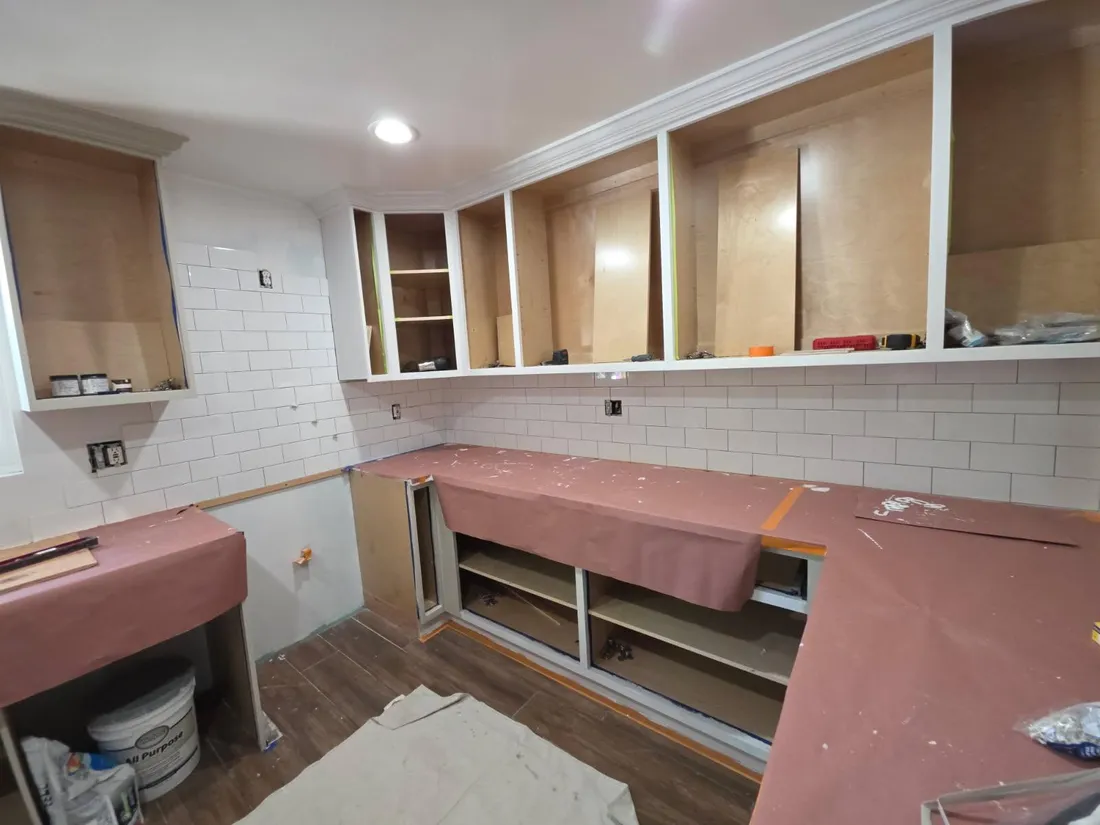
Real jobs from FinerNest pros — not stock photos. Tap a photo to see who did it.
How the work actually works
A full kitchen is a sequence of trades that has to happen in the right order. Here's the flow and the decisions that quietly blow budgets.
- 1
Design and lock the layout
Settle the layout and where plumbing, gas, and electrical land before demo. Changing the layout after the walls are open is the #1 cost overrun. Keep the 'work triangle' (sink, stove, fridge) tight.
- 2
Demo and rough-in
With the walls open, plumbing, electrical, and gas are moved or added and inspected. Dedicated circuits for the big appliances and a vented range hood get planned here.
- 3
Set cabinets, then template the counter
Cabinets go in dead level first — because the countertop can only be measured ('templated') once the cabinets are set. For stone or quartz, that template kicks off 1–2 weeks of fabrication, so the counter is never same-day.
- 4
Counters, backsplash, appliances, trim-out
Counters set, backsplash tiled, appliances fit, and plumbing/electrical trimmed out. The punch list — caulk, adjustments, touch-ups — is real work, not an afterthought.
Cabinets — the biggest decision
Cabinets drive both the price and the feel of the kitchen. The tier sets the fit and options; the box construction sets how long they last.
- Stock
- Pre-made in standard sizes — the cheapest and fastest, but limited sizes mean filler strips bridge the gaps. Fine for simple layouts and budgets.
- Semi-custom
- Standard boxes with many more sizes, finishes, and modifications. The sweet spot for most remodels — flexibility without full-custom cost.
- Custom
- Built to your exact space and spec — any size, finish, or detail. The priciest, for unusual layouts or a specific look.
- Box construction (the durability tell)
- A plywood box with dovetailed, soft-close drawers lasts decades; a particleboard box with stapled drawers is the budget build that sags and swells if it gets wet.
- Framed vs. frameless
- Framed (a face frame on the box) is traditional; frameless ('full-access' / European) gives wider openings and a modern look. Mostly a style and access choice.
Countertops
The counter is the kitchen's workhorse surface — pick for durability and upkeep, not just looks.
- Laminate
- Cheapest, with a huge color range and low maintenance — but it can chip, scorch, and show seams. A budget or rental choice.
- Quartz (engineered)
- Ground stone in resin — non-porous, no sealing, very durable and consistent. The popular premium default.
- Granite / natural stone
- Real stone, each slab unique; durable but porous, so it needs periodic sealing. Marble is softer and etches with acids.
- Butcher block
- Warm wood — affordable and repairable by sanding, but it needs oiling and isn't ideal right at the sink.
- Porcelain / sintered stone
- Ultra-durable, heat- and UV-proof, in large thin panels — premium and newer.
Where kitchen budgets blow up
Almost every overrun comes from a handful of predictable places.
- Changing the layout after demo
- Moving the sink, stove, or a wall once work has started multiplies plumbing and electrical cost. Decide early.
- Moving plumbing or gas
- Relocating a drain or a gas line is far more than it looks; keeping fixtures where they are saves the most.
- Countertop template lead time
- Stone and quartz can't be cut until the cabinets are in, then it's 1–2 weeks at the fabricator — plan to live without a counter in between.
- Appliance fit and specs
- Panel-ready, counter-depth, and gas-vs-electric details have to match the cabinets and utilities — confirm before ordering.
Red flags of a corner-cut job
- Starting demo before the layout, cabinets, and appliances are finalized.
- Particleboard cabinet boxes and stapled drawers sold at a premium price.
- No dedicated circuits or a vented range hood in the electrical plan.
- A schedule that promises countertops the same day as cabinets (impossible for stone).
- A vague 'allowance' for cabinets and counters that hides the real cost.
Put it in writing
- A locked layout and final appliance specs before demo starts.
- Plywood boxes (and the cabinet tier/construction) named in writing.
- Dedicated appliance circuits and a range hood vented outside.
- A realistic schedule that accounts for countertop fabrication time.
- Itemized cabinet and countertop pricing, not a blanket allowance.
Talk like a pro
The terms a contractor uses — so you can follow the conversation and ask the right questions.
- Work triangle
- The sink–stove–fridge layout that keeps cooking efficient.
- Template
- Precise measuring of the installed cabinets so the countertop can be fabricated to fit.
- Framed vs. frameless
- Cabinet boxes with a face frame vs. full-access European boxes.
- Rough-in vs. trim-out
- Running pipes and wires while walls are open vs. installing the visible fixtures at the end.
- Soft-close / dovetail
- Quality drawer hardware and joinery — signs of a well-built cabinet.
- Filler strip
- A blank piece that bridges the gap where stock cabinets don't quite fill a run.
What drives the cost
- Scope — a fixture swap vs. a cosmetic refresh vs. a full gut-and-reconfigure
- Cabinets — usually the single biggest line; stock vs. semi-custom vs. custom is a wide spread
- Countertop material, and whether you move plumbing, gas, or walls (layout changes)
- Appliance package and the depth of finish work (backsplash, trim, lighting)
What it costs to hire
Typical per-unit ranges for kitchen services (estimates until local pros publish their rates):
Cabinet hardware install (pulls/knobs) | $6.31–$6.31 per piece |
Stock cabinet install | $32–$32 per linear ft |
Garbage disposal install | $104–$104 per unit |
Dishwasher install | $104–$104 per unit |
Range hood install — ducted | $164–$164 per unit |
See full prices and pros in Palmdale, Los Angeles.
Permits & safety
Permit and licensing rules vary by city and county. Before you start, check your local building department — and when in doubt, a licensed pro will know what your jurisdiction requires.
Kitchen FAQ
What should a kitchen quote actually include?
A good quote names the materials, the spec or grade, and the scope of work — not just one lump-sum number. The more a bid leaves vague, the more room there is for surprise costs and cut corners. The checklist above lists exactly what to put in writing for this kind of work.
How much does Kitchen work cost?
On FinerNest, Kitchen work is priced by the unit rather than as a single bid, so you see the rate up front. The rates above reflect what pros publish; open the city links to see full prices and available pros near you.
How do I find a trustworthy kitchen pro?
Look for published rates, reviewable past work, and verified licensing where it applies. FinerNest lists local pros with all three so you can compare on work and price rather than chasing quotes.
Decided to hire it out?
Compare kitchen pros with real rates and reviewable work.