
Flooring: what to know before you hire
Two decisions make or break a floor: which material you choose, and the subfloor prep you never see. This guide helps you pick between laminate, LVP, engineered, and solid wood — then shows where the install quietly succeeds or fails.
What flooring work looks like
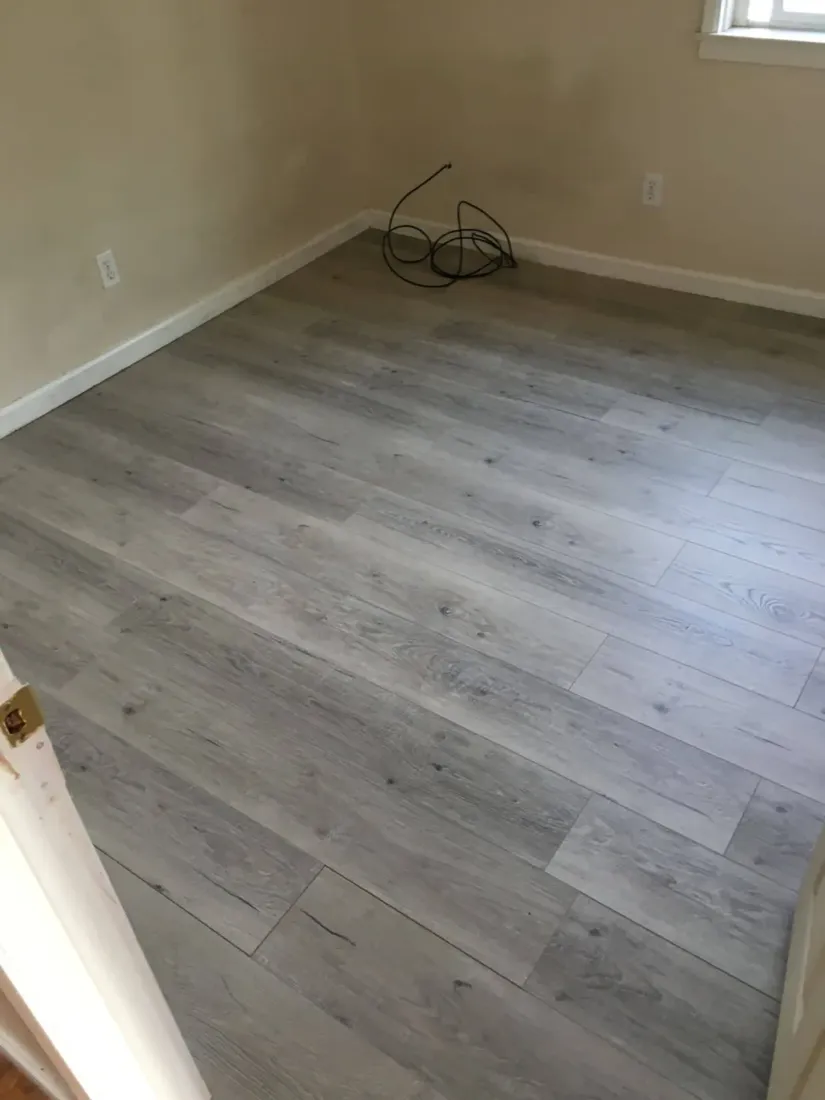
Real jobs from FinerNest pros — not stock photos. Tap a photo to see who did it.
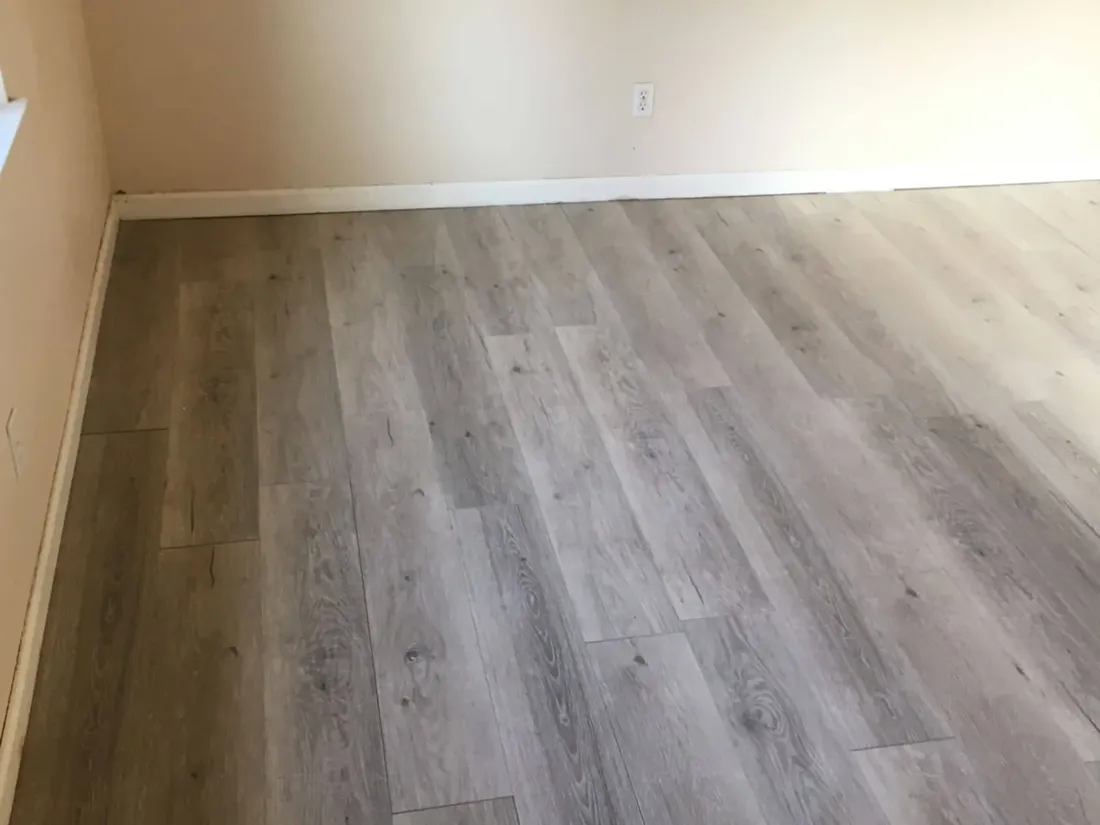
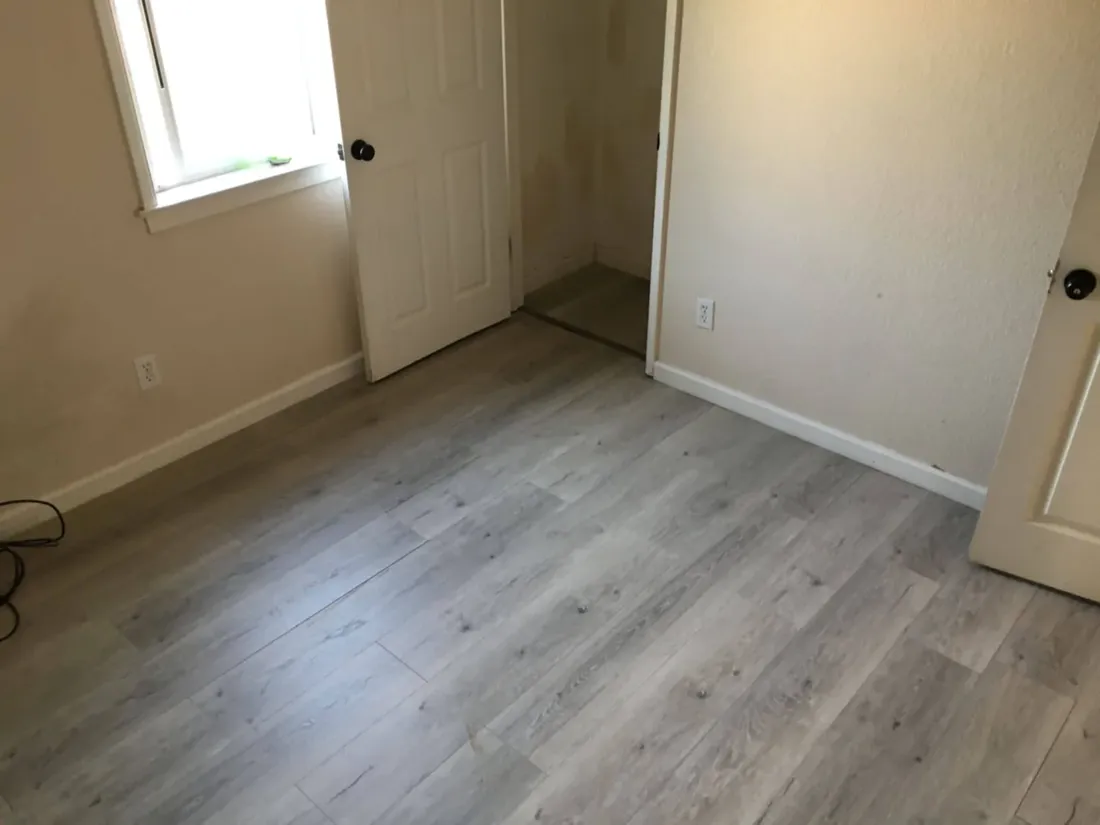
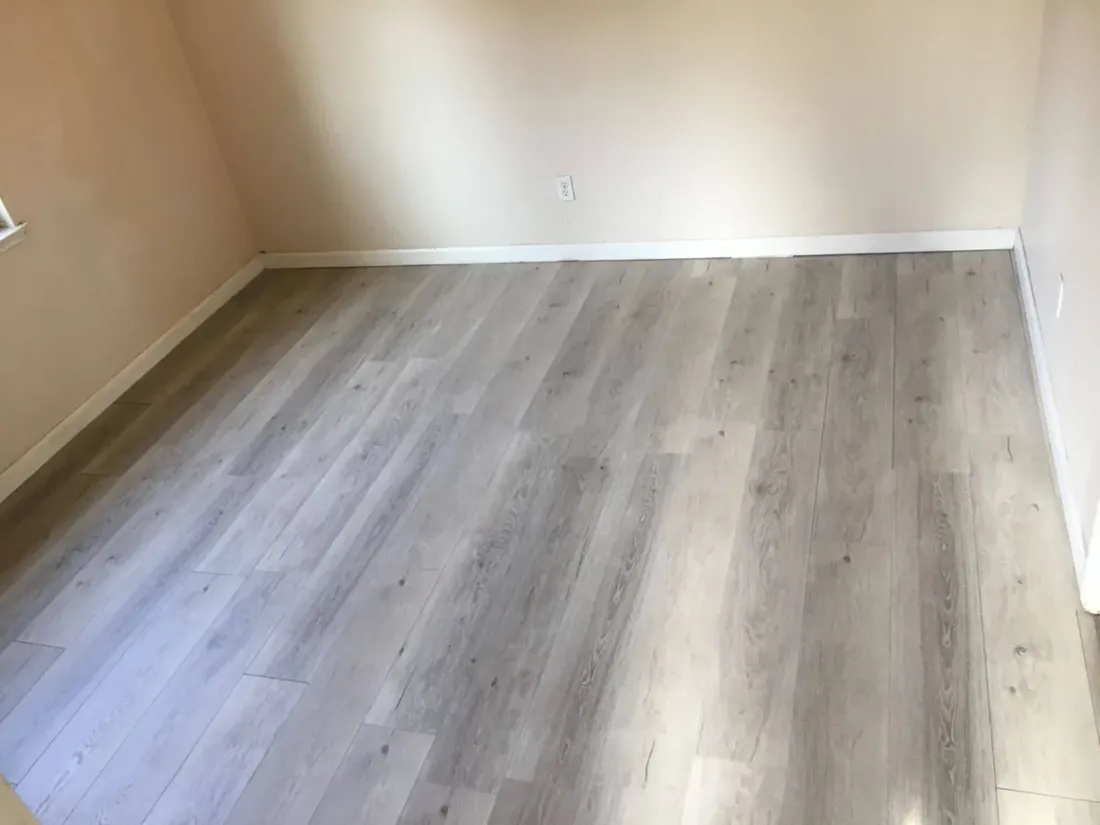
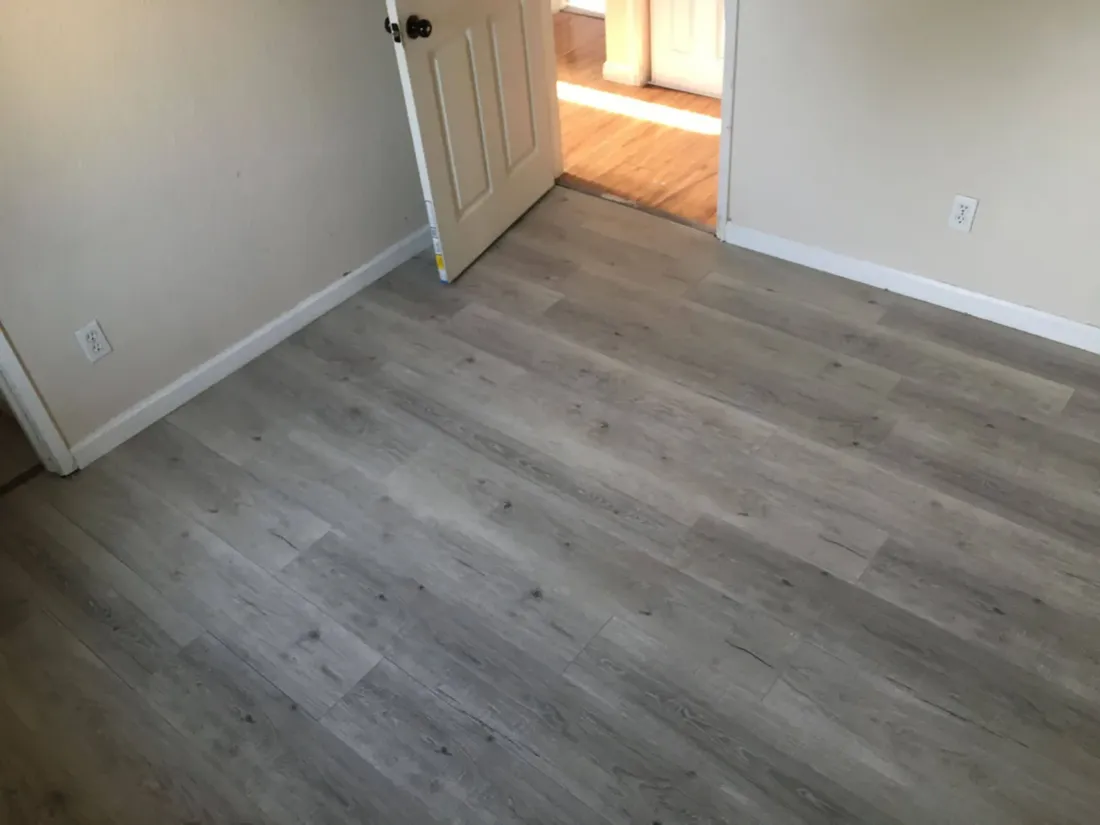
How the work actually works
Two things decide a floor: the material you choose and the prep you never see. Here's how to pick between the options, then the install sequence and the spec numbers that predict how long it lasts.
- 1
Assess & prep the subfloor
The subfloor is checked for flatness and moisture. Most makers require flatness within ~3/16" over 10 ft; high spots get ground down, low spots get self-leveler. Concrete gets a moisture test. Skip this and floating floors flex, click, and gap.
- 2
Acclimate the material
Wood and some LVP sit in the room for days to adjust to its humidity. Installing 'cold' off the truck is why boards later cup or leave gaps.
- 3
Lay underlayment / moisture barrier
Foam or cork for floating floors (cushion + sound); a poly barrier over concrete. The right underlayment is matched to both the floor and the slab.
- 4
Install with the right method
Floating (click-lock), glue-down, or nail-down — each suited to a material. Expansion gaps are left at every wall; transitions and trim finish the edges.
What you're actually buying
Two floors that look identical can be built completely differently. The numbers that matter rarely appear in the showroom name.
- LVP wear layer (mil)
- Measured in mil, not mm. 6 mil is builder-grade; 12 mil handles a busy home; 20+ mil is commercial. This number — not the plank's looks — predicts how it wears.
- Engineered wood wear layer
- The real-wood top veneer. A thick (3–6 mm) layer can be sanded and refinished once or twice; a thin one can't be refinished at all.
- Laminate AC rating
- Abrasion class AC1–AC5. AC3 is the residential minimum; AC4–5 for heavy traffic. Below AC3 wears through at doorways.
Laminate vs. LVP vs. engineered vs. solid wood — how to choose
The four common floors look alike in a showroom but live completely differently. The real question is how you'll fix one in year five — refinish it, or rip it out — and whether this is a forever home.
- Laminate
- A printed photo of wood under a hard wear layer, over a fiberboard core. The cheapest wood look and scratch-resistant on top — but the core swells if water sits on it, and it can't be refinished. A budget floor for dry, low-stakes rooms.
- Luxury vinyl plank (LVP)
- 100% waterproof and kid/pet-proof, and it spans a huge price range — thin builder-grade up to thick rigid-core with a 20+ mil wear layer. The catch: a deep scratch or gouge can't be sanded out — you replace that plank, and matching the exact color and batch five years later is often impossible. Great value, not a refinishable surface.
- Engineered wood
- A real-hardwood veneer over a stable plywood core — genuine wood looks and feel, and more stable than solid wood over concrete or in basements. Unlike LVP, a thick enough veneer (3–6 mm) can be sanded and refinished once or twice to erase wear. A thin veneer can't be refinished at all, so the wear-layer thickness is everything.
- Solid hardwood
- One solid piece of wood — the forever floor. Scratch it, dent it, or tire of the color and you sand it down and refinish, many times over decades. The trade-offs are price, sensitivity to moisture (not ideal for basements or over concrete), and a longer install. This is why people in long-term homes pay for it.
- Bottom line — which to pick
- Renting it out, or it's not your forever home? LVP wins on cost and waterproofing. Staying for decades and want to refresh the look later? Engineered or solid wood, because you refinish instead of replace. The deciding question is always: in year five, do you want to sand and refinish — or rip out and re-match?
Red flags of a corner-cut job
- No mention of checking subfloor flatness or moisture.
- Installing the same day the material is delivered (no acclimation).
- Buying LVP for a forever home expecting to refinish it — you can't; scratches mean replacing planks, and the match may be gone in a few years.
- Quoting LVP by 'wear layer in mm' (it's measured in mil — a tell they don't know the product).
- No expansion gap, or baseboards pinning a floating floor down.
Put it in writing
- Subfloor prep in the quote: flatness check, leveling allowance, moisture test on concrete.
- Acclimation time per the manufacturer.
- The exact wear layer (mil for LVP, veneer mm for engineered) or AC rating — in writing.
- A solid or thick-veneer engineered floor if you want to refinish later instead of replace.
- Who moves furniture, removes the old floor, and disposes of it.
Talk like a pro
The terms a contractor uses — so you can follow the conversation and ask the right questions.
- Refinish (sand & re-coat)
- Sanding off the worn top of a wood floor and re-coating it — possible on solid wood (many times) and thick-veneer engineered (once or twice), impossible on LVP and laminate (you replace planks instead).
- Rigid-core / SPC LVP
- Stone-plastic-composite vinyl with a rigid, dimensionally stable core — the higher-end, quieter, more dent-resistant tier of LVP.
- Subfloor vs. underlayment
- Subfloor is the structural deck (plywood/concrete); underlayment is the thin layer between it and your floor.
- Self-leveler
- Pourable compound that flattens a wavy subfloor — a real line item, not a nicety.
- Acclimation
- Letting flooring adjust to room humidity before install so it doesn't move later.
- Expansion gap
- The deliberate space at walls so a floating floor can move with humidity; hidden by baseboard or quarter-round.
- Cupping / gapping
- Boards curling or pulling apart — almost always a moisture or acclimation failure, not a product defect.
What drives the cost
- Material — laminate and basic LVP are cheapest; engineered and solid hardwood cost more (and install slower)
- Subfloor condition and any leveling or moisture mitigation
- Room complexity — cuts, transitions, and stairs add labor per sq ft
- Furniture moving and old-floor demo / haul-away
What it costs to hire
Typical per-unit ranges for flooring services (estimates until local pros publish their rates):
Floor tear-out — carpet + pad | $0.35–$0.35 per sq ft |
Floor tear-out — vinyl / laminate | $1–$1 per sq ft |
Laminate floating install | $2–$2 per sq ft |
Engineered hardwood — nail-down | $2.50–$2.50 per sq ft |
Solid hardwood — nail-down | $3.75–$3.75 per sq ft |
See full prices and pros in Palmdale, Los Angeles.
Permits & safety
Permit and licensing rules vary by city and county. Before you start, check your local building department — and when in doubt, a licensed pro will know what your jurisdiction requires.
Flooring FAQ
What should a flooring quote actually include?
A good quote names the materials, the spec or grade, and the scope of work — not just one lump-sum number. The more a bid leaves vague, the more room there is for surprise costs and cut corners. The checklist above lists exactly what to put in writing for this kind of work.
How much does Flooring work cost?
On FinerNest, Flooring work is priced by the unit rather than as a single bid, so you see the rate up front. The rates above reflect what pros publish; open the city links to see full prices and available pros near you.
How do I find a trustworthy flooring pro?
Look for published rates, reviewable past work, and verified licensing where it applies. FinerNest lists local pros with all three so you can compare on work and price rather than chasing quotes.
Decided to hire it out?
Compare flooring pros with real rates and reviewable work.